The Third / 2026
Room to belong.
Space to connect.
Exploring how a shared space, small businesses, and simple conversation tools can make meeting people in Seattle feel more approachable.
- Role
- Service designer
- Timeline
- Mar 2026–Jun 2026
- Team
- 5 people
- Tools
- Figma and Illustrator
01 / Context
Being around people is only a starting point
The project explored the social hesitation often described as the “Seattle Freeze”: meeting people can feel difficult even when there are plenty of places to go. The team asked how third spaces and pop-up businesses could help make community participation more comfortable.
The Third proposes a shared setting with rotating small businesses, different environments for gathering, and tools that help visitors begin and continue conversations. The goal was to support connection while giving people control over how they participate.
02 / Research
Connection depends on more than a place to sit
The team combined field observations, interviews, and a literature review, studying social settings across Seattle. Affinity diagramming brought together insights about social expectations, the environment, and repeat encounters.
Look at everyday interaction
Research in settings including libraries, cafés, parks, and pop-ups examined how people entered and participated in shared spaces.
Find the hidden barriers
The synthesis identified pressure to buy something, the importance of people who help break the ice, and the role of repeated interactions.
Design with participants
Groups drew top-down layouts of their chosen third spaces. Their designs emphasized variety in seating, activities, privacy, and sound.
Co-design takeaway / Choice supports participation
Social comfort
Different table sizes and separated spaces let people choose how close to the group they want to be.
Ways to engage
A range of activities creates more than one way to join in.
Environmental control
Sound and music preferences affect whether a setting feels comfortable.
Affinity map
The affinity map groups the research behind the focus on social comfort, repeat encounters, and choice in how people participate.
03 / Direction
Make participation an invitation, with options
The ecosystem map considered different entry points, from discovering a place through friends or social media to seeking connection after moving to a new city. The journey map and service blueprint documented the broader experience around a visit.
The design requirements translated the research into a service with a low barrier to entry, support for conversation, and different levels of social and sensory intensity.
| Research insight | Design response |
|---|---|
| Visitors can feel pressure to spend money to justify staying. | Make belonging independent of a purchase and offer free Connection Kits. |
| Introductions often need support. | Provide conversation prompts and activity instructions. |
| Repeat encounters help people build familiarity. | Include a contact booklet to support reconnecting. |
| People differ in social and environmental preferences. | Offer varied seating, sound levels, and a quieter focus room. |
| Partnerships create opportunities for discovery and connection. | Bring rotating local pop-ups into the service concept. |
Ecosystem map
The ecosystem map places the visitor within the wider network of people and places involved in the service.
Journey map
The journey map follows the experience around a visit, connecting the service direction to what a person encounters over time.
Service blueprint
The blueprint brings the visitor experience together with the work needed to support it. This leads into the physical materials shown below.
04 / Design
Support connection before, during, and after a visit
The concept pairs two main prototypes: Connection Kits and a designed physical environment. A narrative prototype brought these elements together to demonstrate how the service could work in practice.
Connection Kits: a little help getting started
The kits combine activity instructions, tiered conversation prompts, and a contact booklet. Participants can choose their level of disclosure and decide how much to share. The signage invites visitors to use the materials on site, keep the booklet, and ask about purchasing a card deck to take home.
Prompt choices support different comfort levels during a conversation, while the booklet helps people maintain a connection afterward.
Invite visitors to pick up the kit
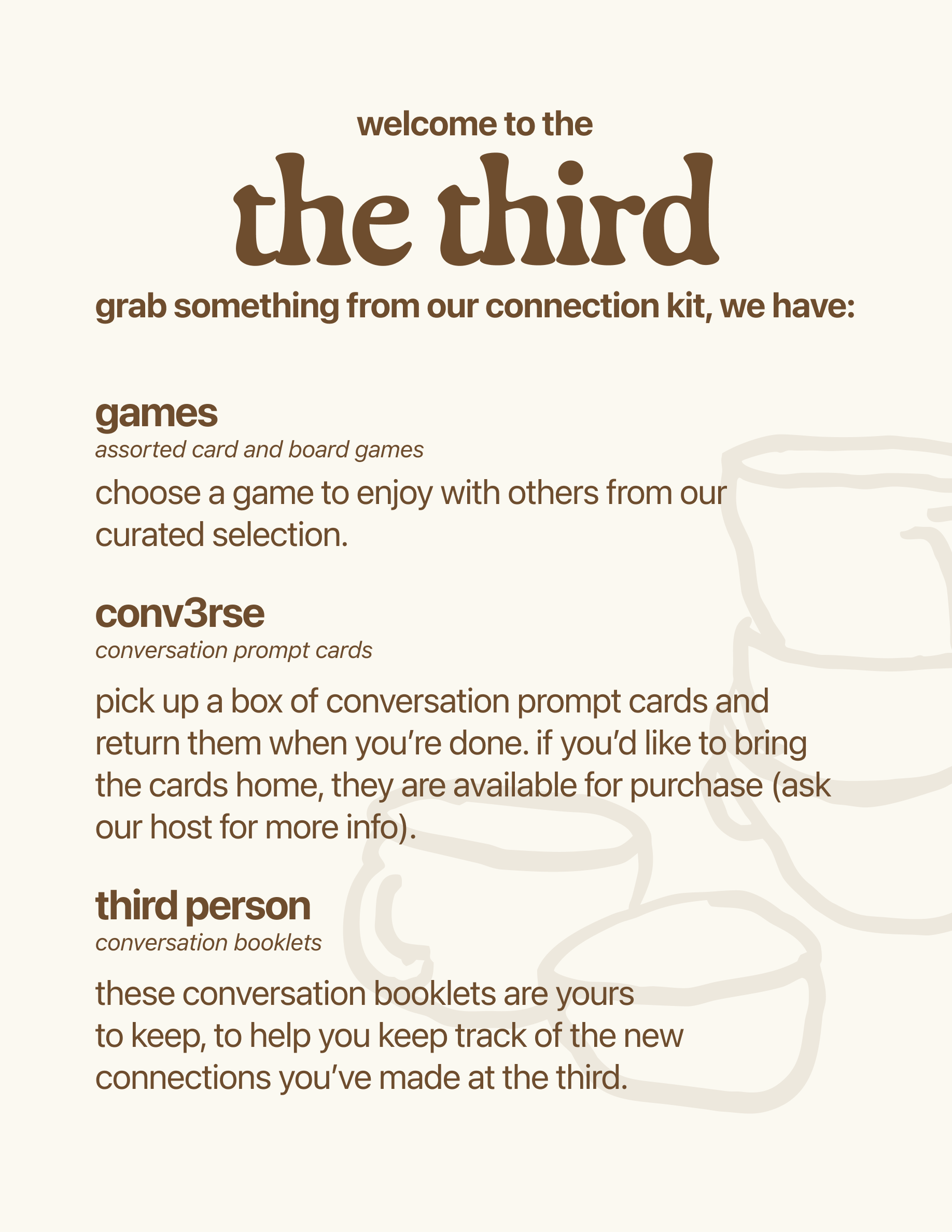
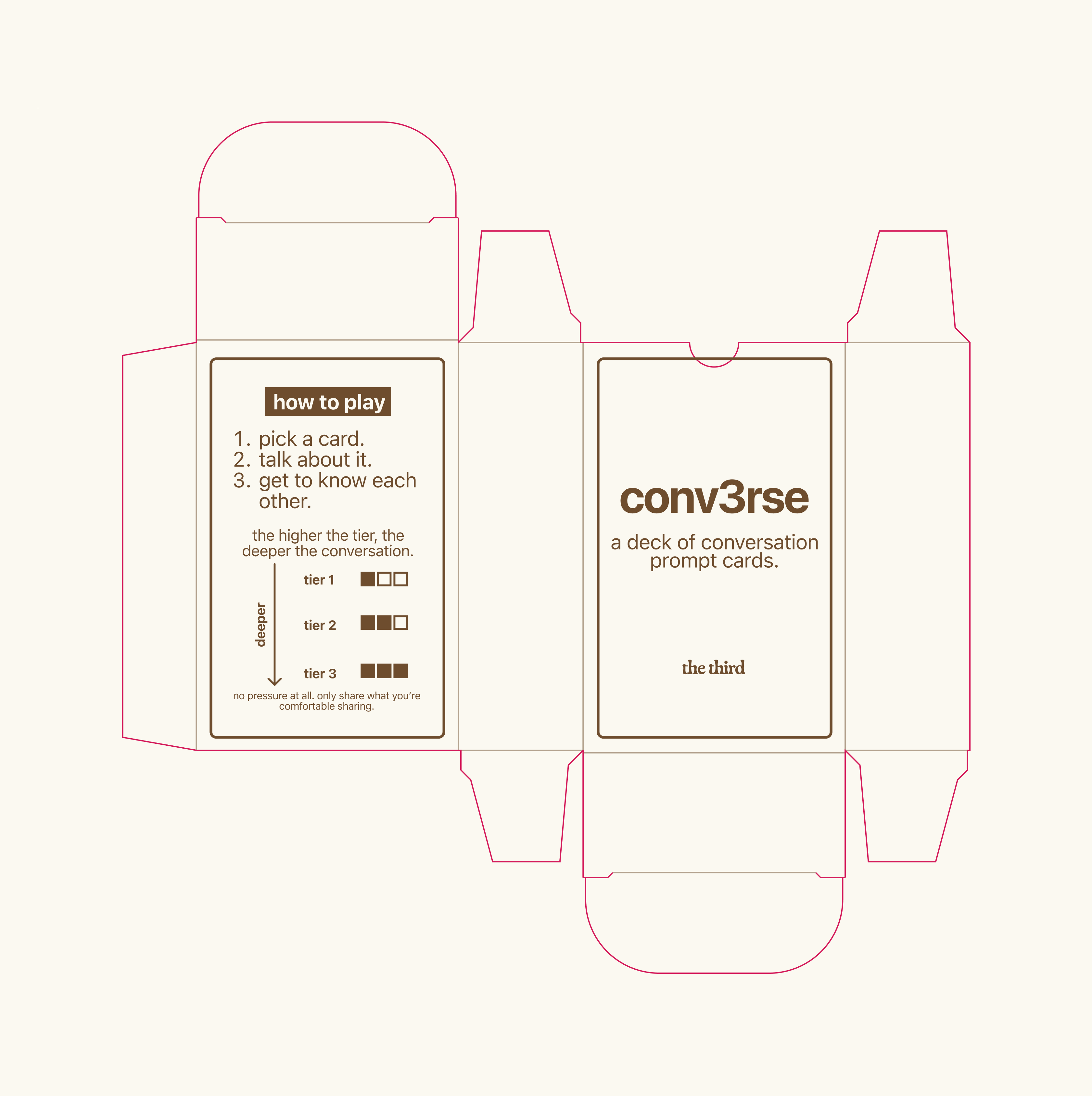
The table sign explains what is available, while the packaging gives the conversation cards a recognizable home.
Let people choose how much to share
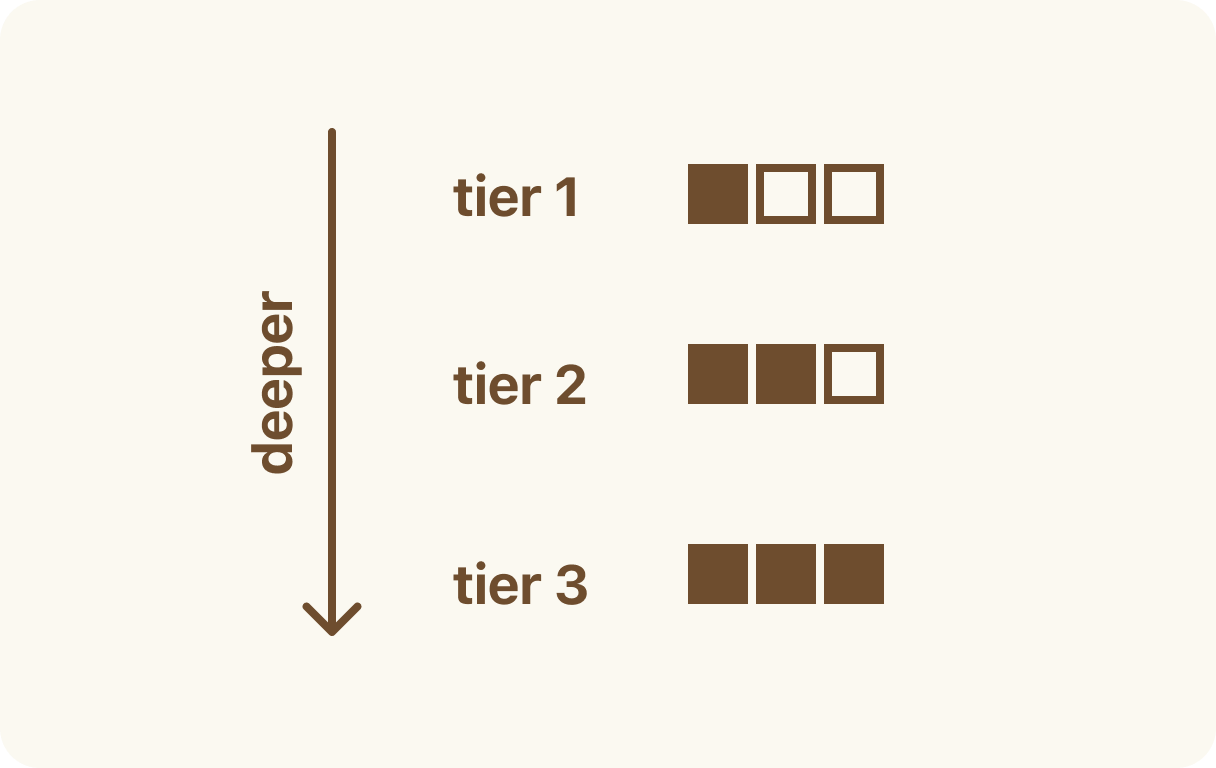

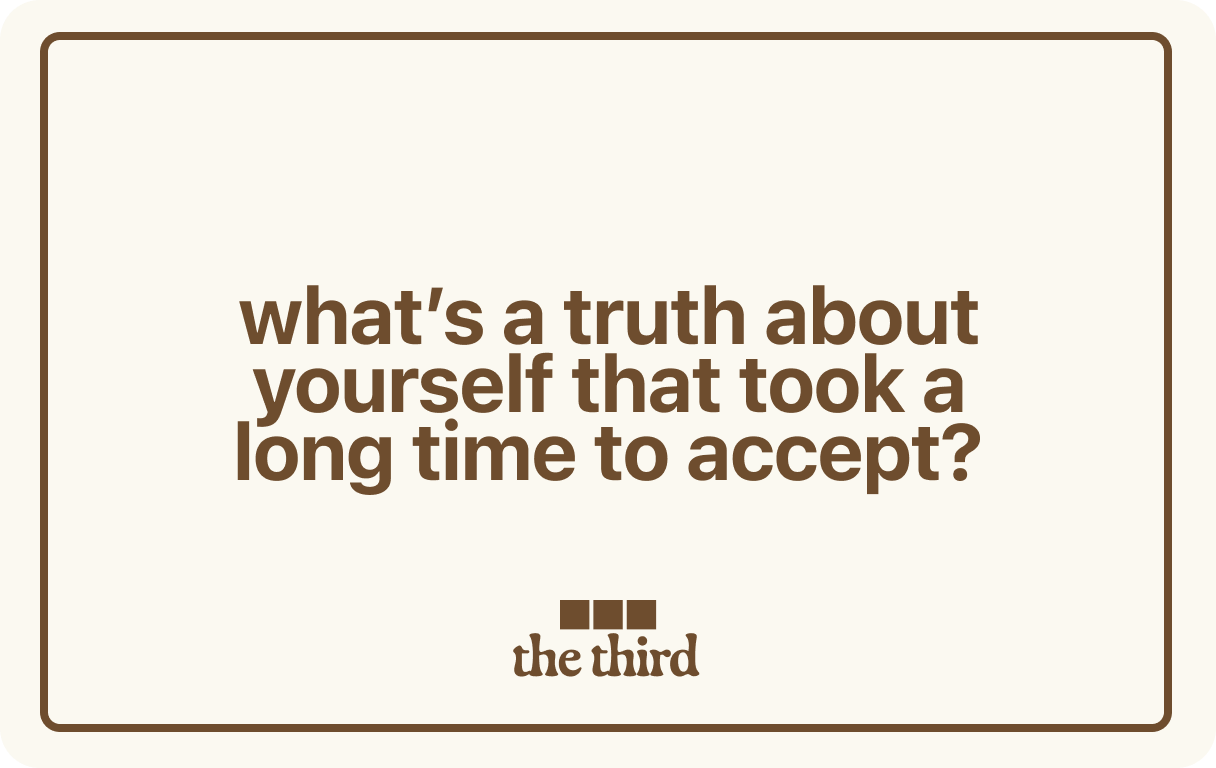
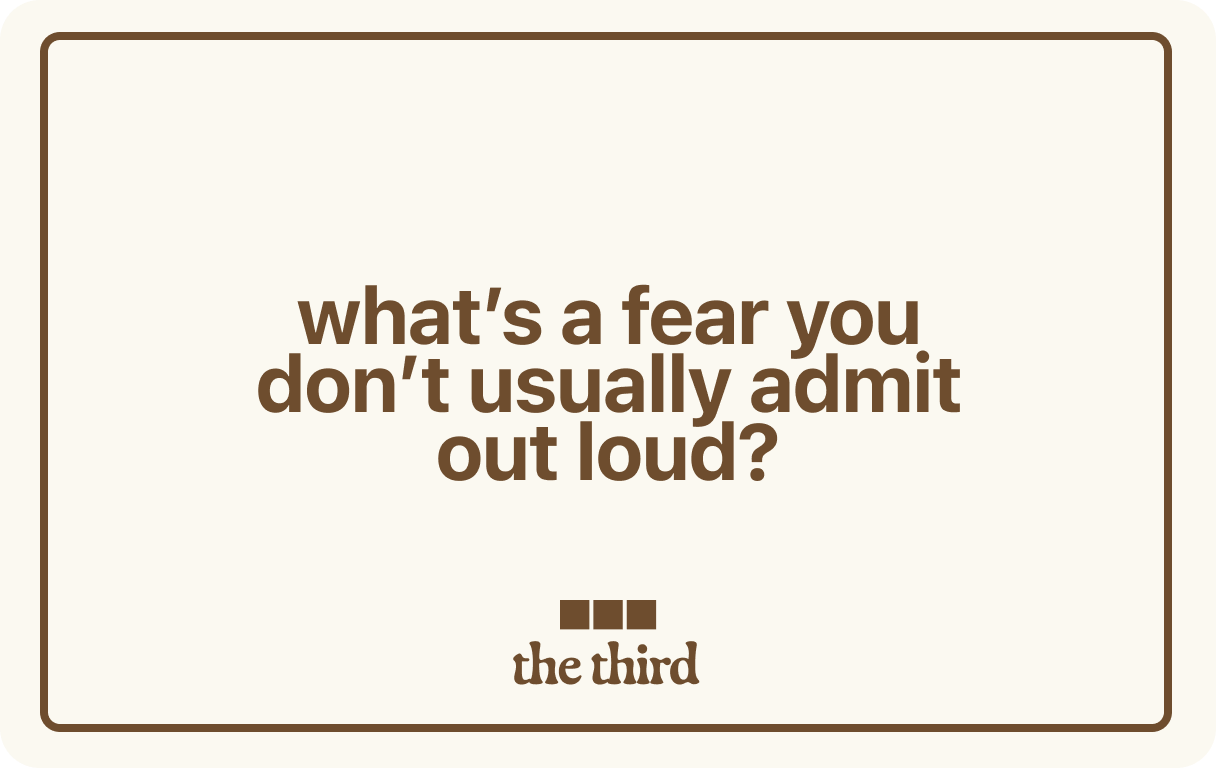
The tier guide and prompts offer different levels of disclosure so people can choose a question that feels comfortable.
Give the conversation somewhere to continue
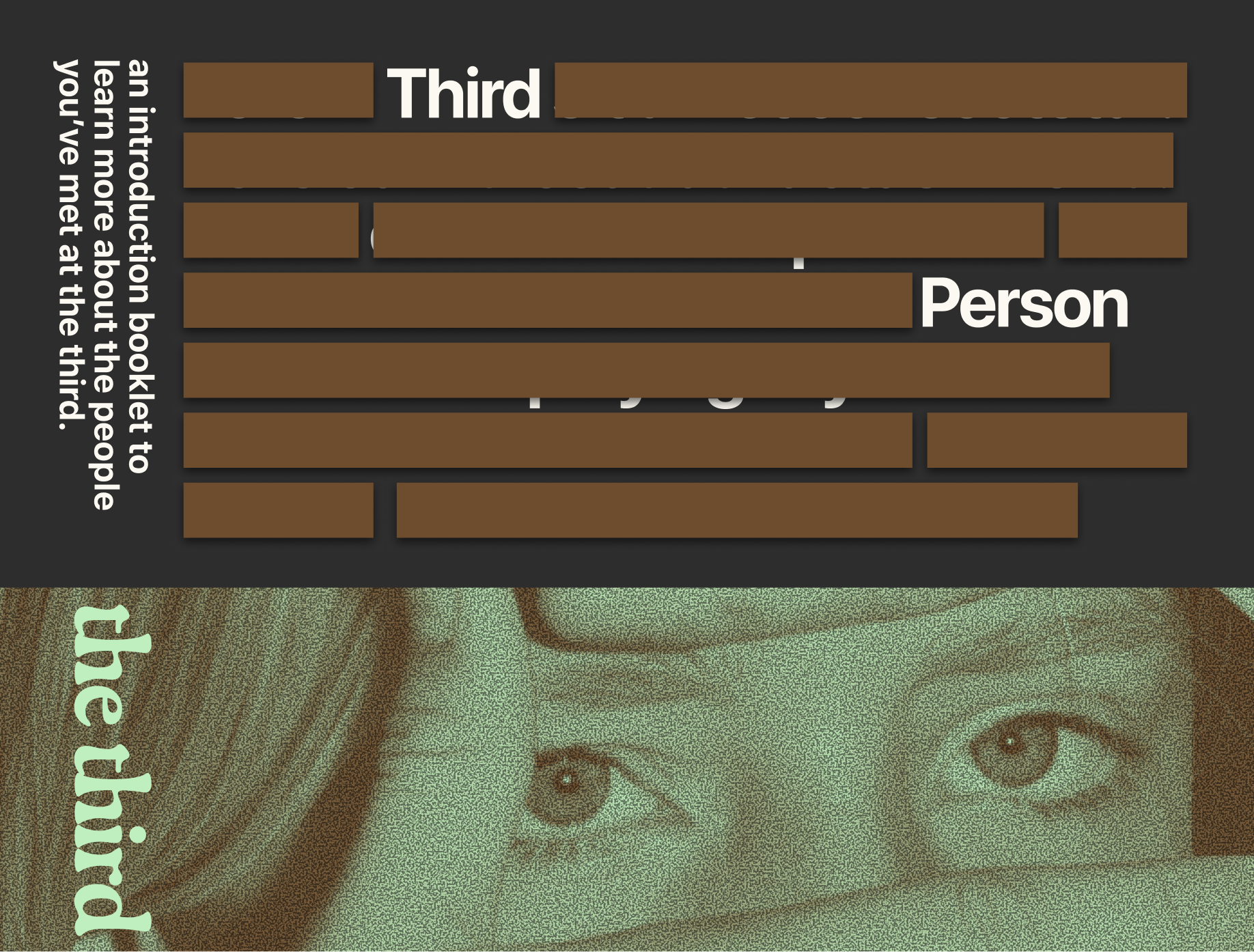
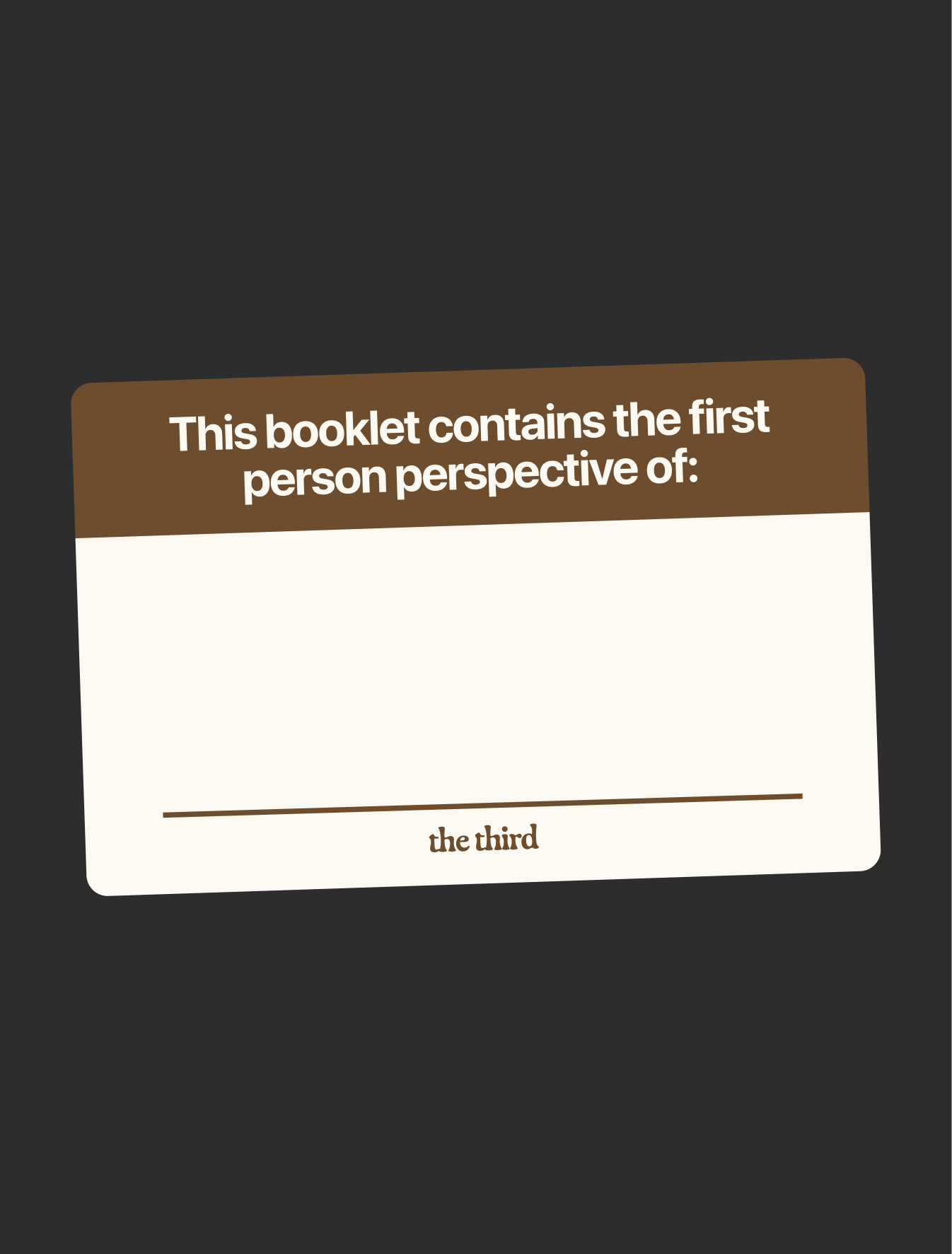
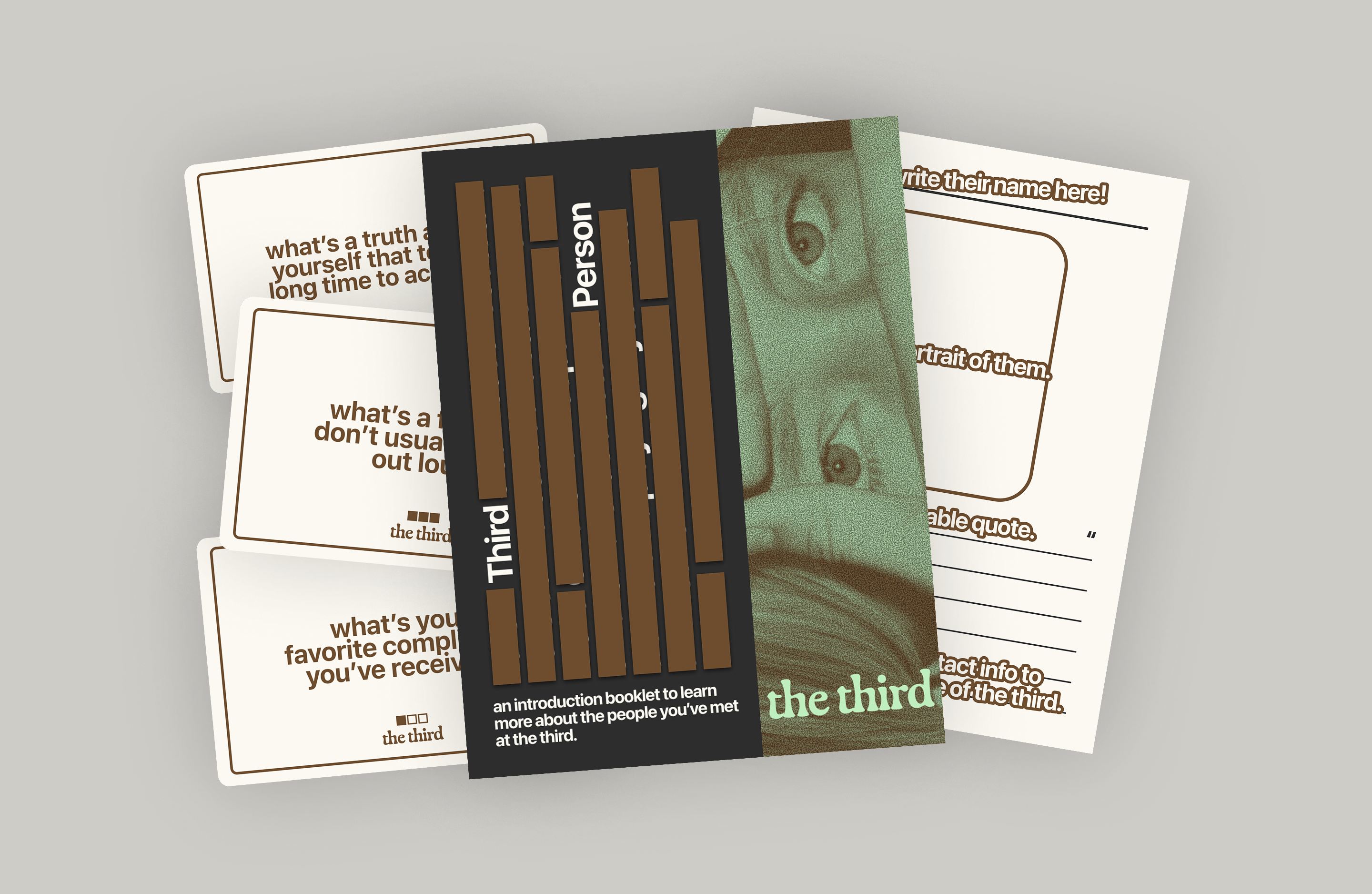
The booklet gives each visitor a personal record of the people they meet.
Explain the exchange, then leave room for a person
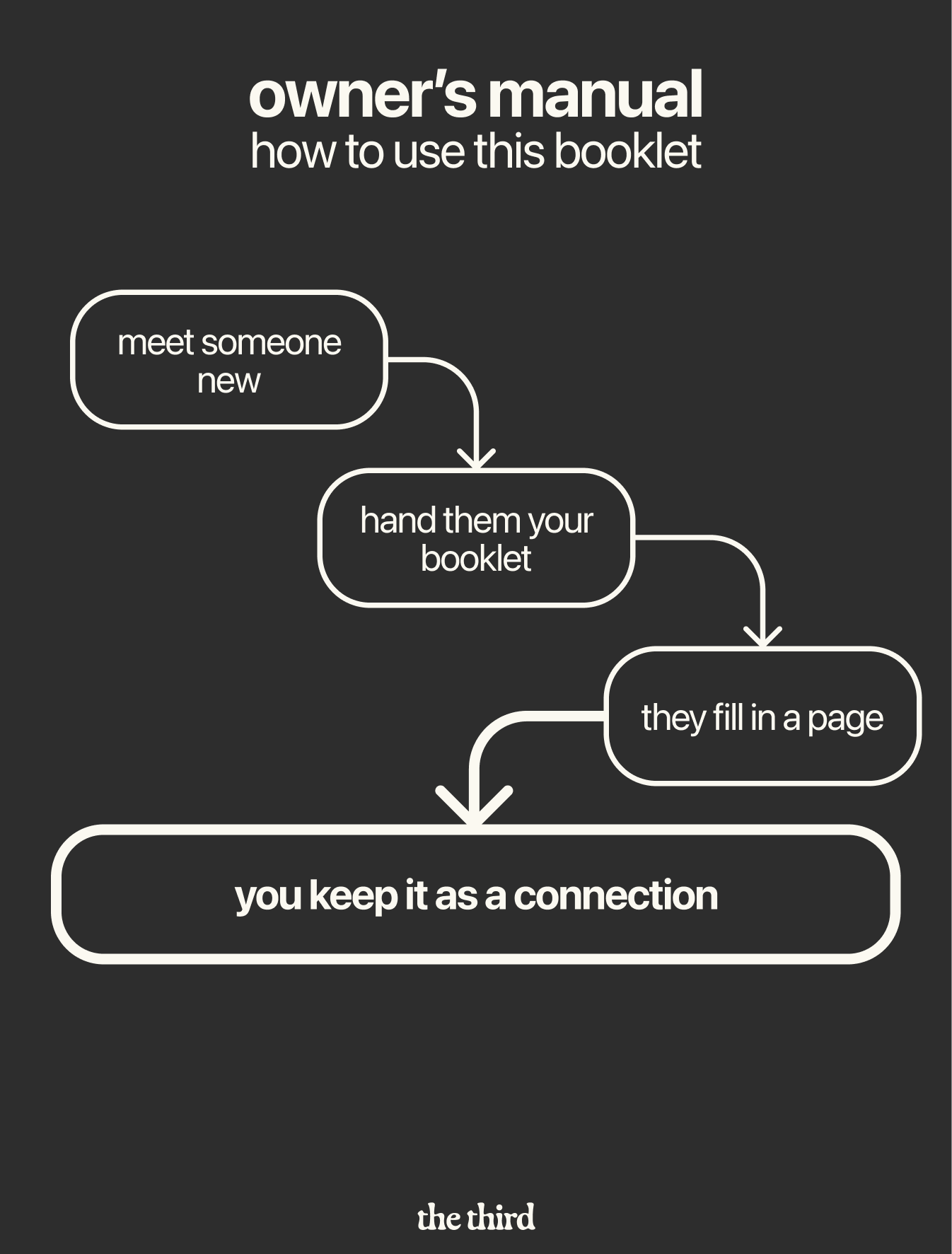
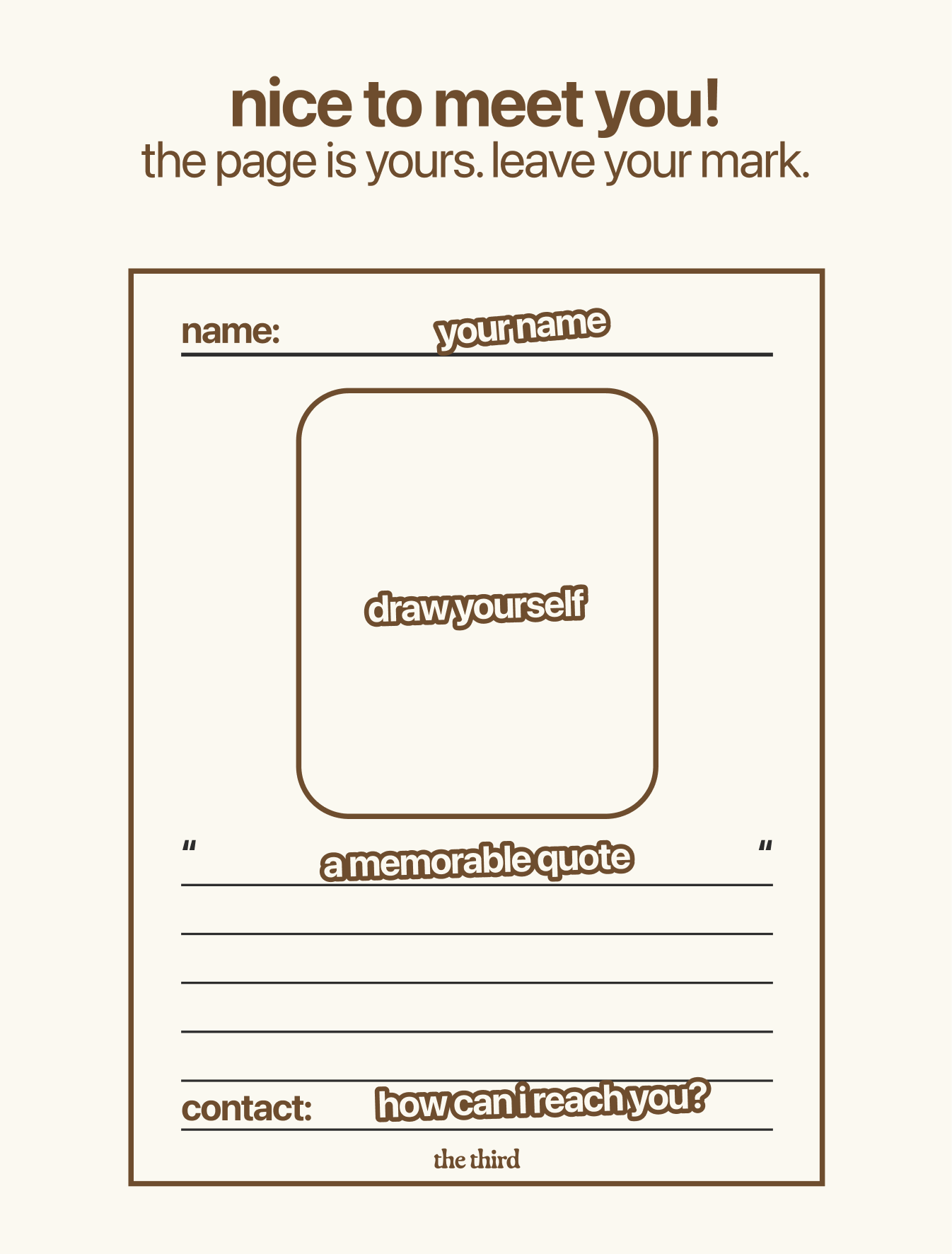
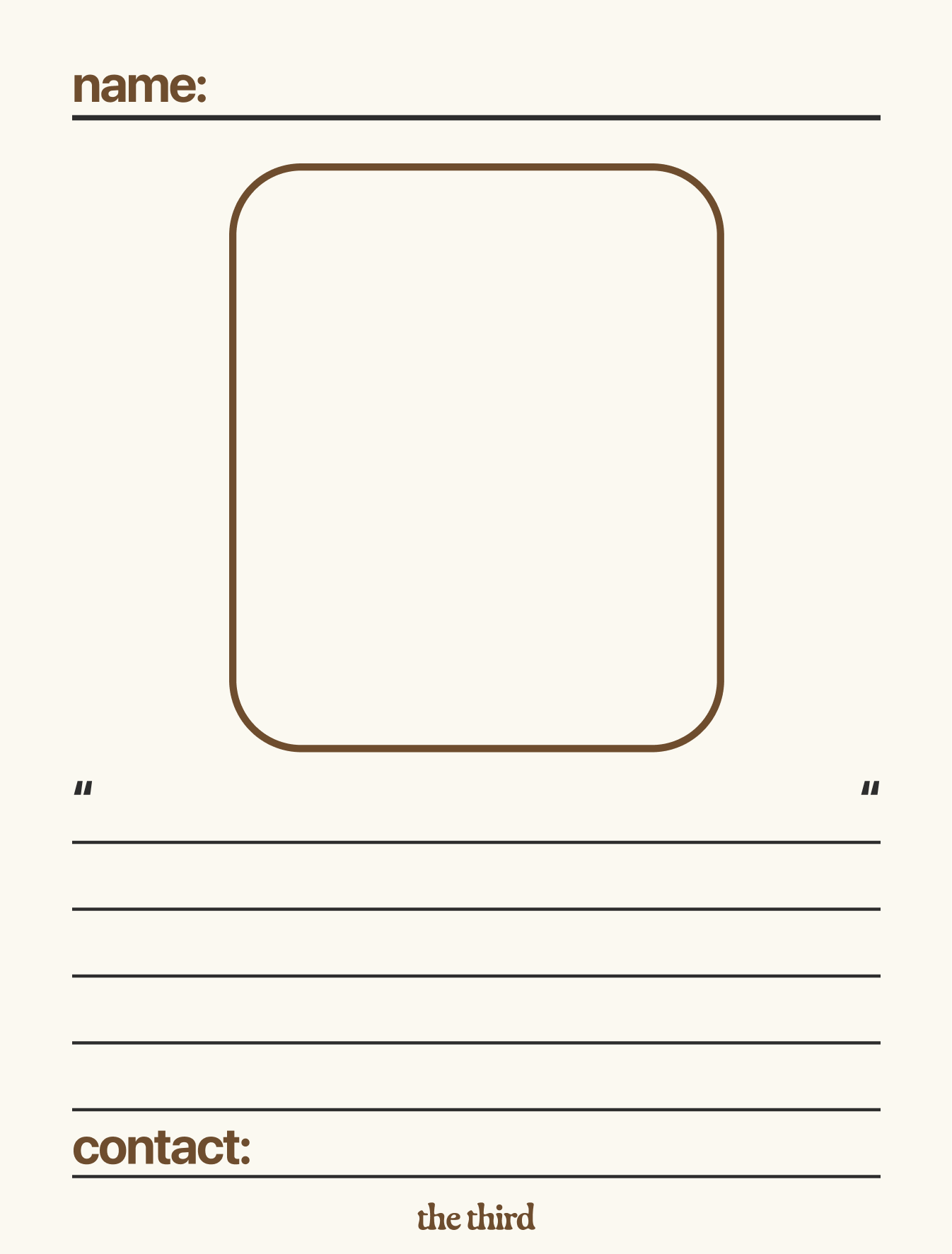
The instructions show how to exchange the booklet. The example page introduces the format, and the blank pages leave space for a drawing, a memorable quote, and contact details.
Environment / Choice
A space with more than one way to participate
The proposed layout includes varied seating, indoor and outdoor areas, rotating pop-ups, and a focus room. Visitors can choose an environment that matches their preferred activity and level of interaction.
The focus-room concept includes adjustable environmental conditions, soft furnishings, and tactile tools. These features aim to support a wider range of sensory preferences.
Orient visitors with a directory
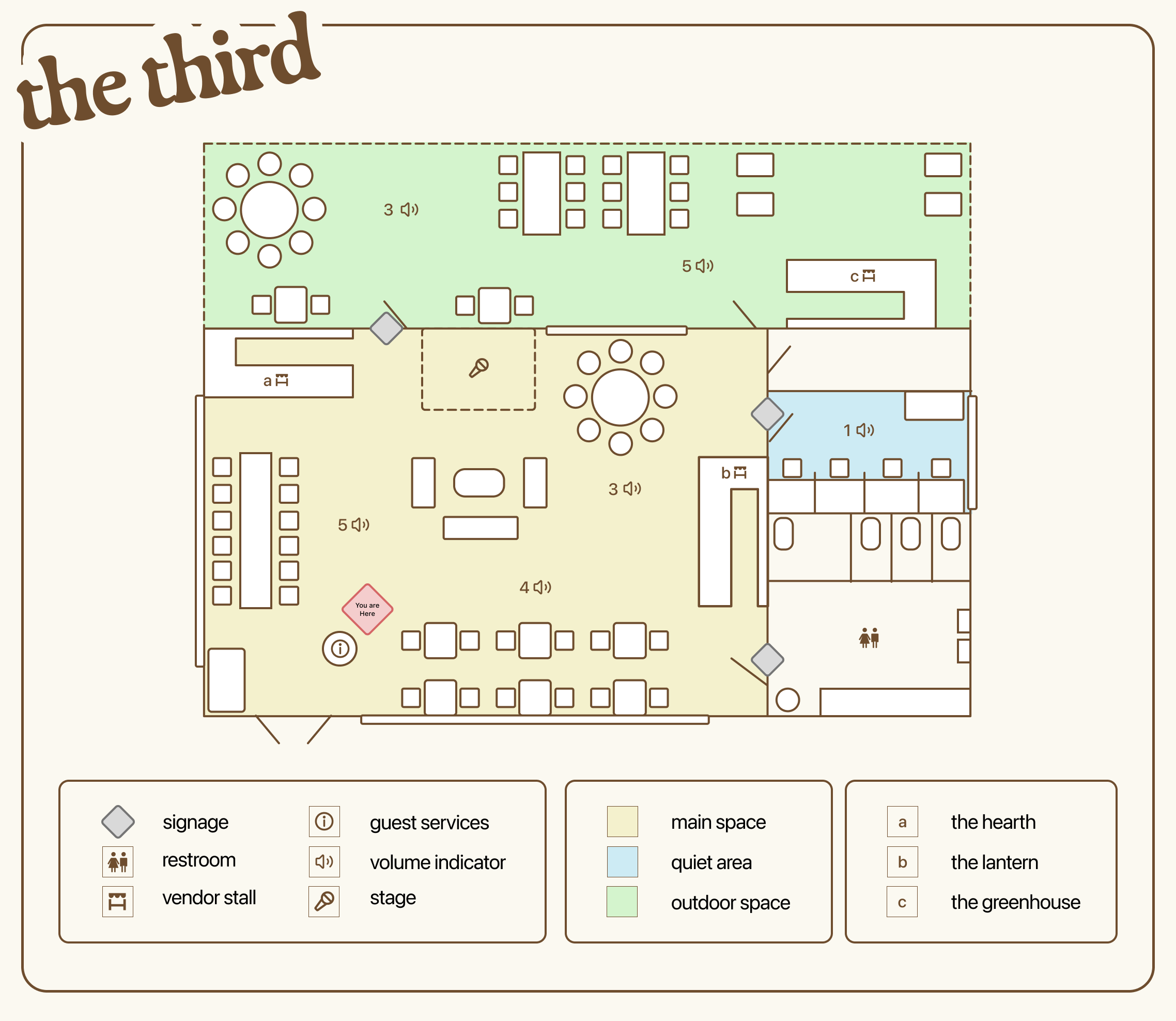
The directory makes the different spaces visible so visitors can choose where to spend time.
Wayfinding / Confidence
Help visitors understand their options
Welcome signs, noise-level indicators, and pop-up descriptions make the environment easier to interpret. This information supports independent navigation and helps visitors choose where they feel comfortable.
Introduce the rotating businesses
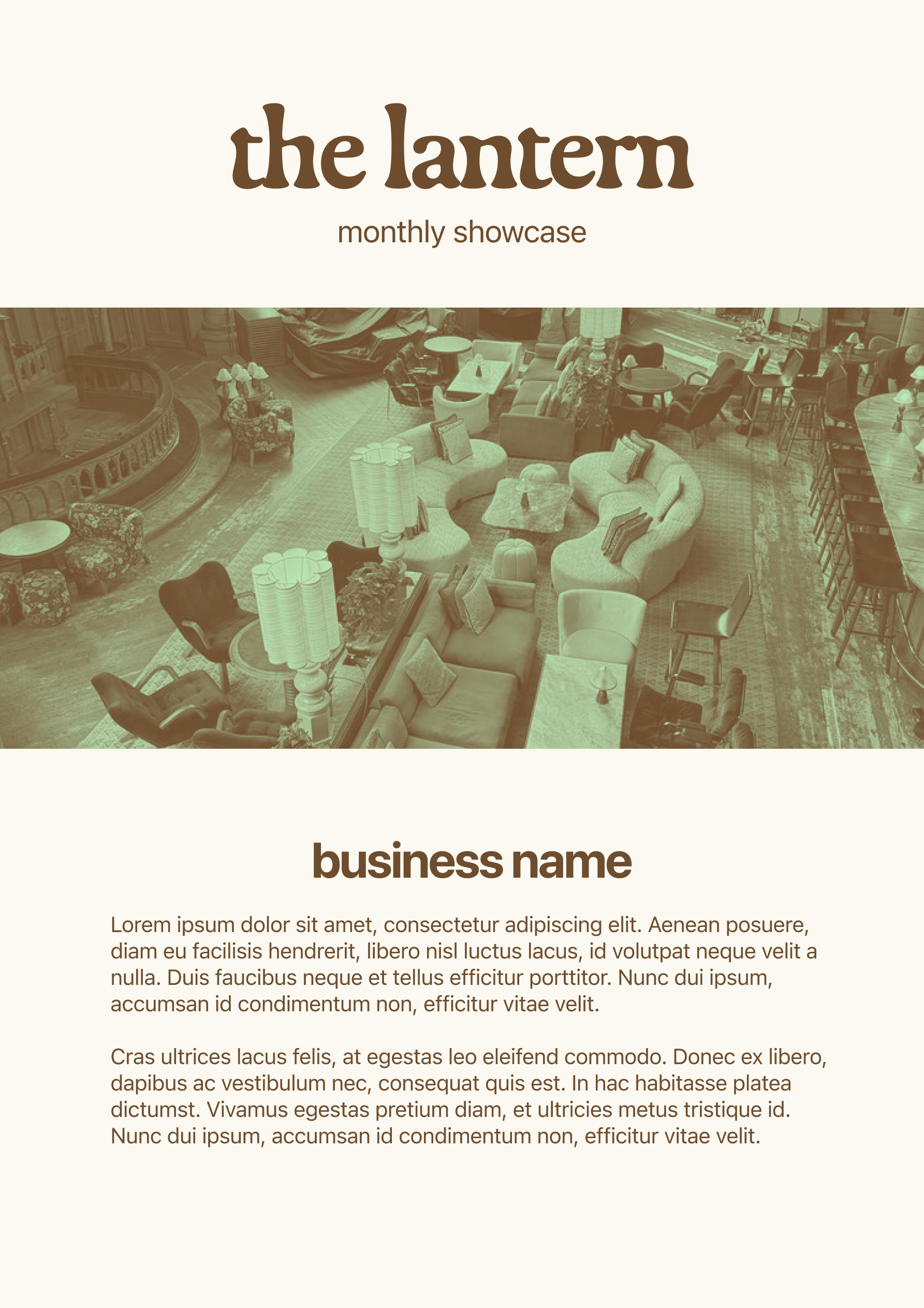
The poster provides a template for introducing a featured business in the monthly showcase.
Narrative / In use
Make the service tangible
The narrative prototype demonstrated the concept in action, including the kits and rotating businesses. It gave viewers a concrete experience to respond to and helped the team gather feedback about the proposed service.
05 / Feedback
A compelling concept, with practical questions to resolve
Showcase attendees responded positively to the visual identity, floor plan, and Connection Kit. Attendees expressed interest in visiting a space like The Third and appreciated having different ways to interact.
The feedback also exposed limits in the concept. Some viewers needed a clearer explanation of what the service offered. Others questioned its financial sustainability and its fit for people with demanding work schedules.
What the feedback changed about the next steps
- Clarify the value. Make it easier for a first-time visitor to understand what they can do at The Third and why they might return.
- Develop the operating model. Work through staffing, maintenance, revenue, and the cost of keeping participation accessible.
- Revisit audience assumptions. Explore how travel, schedules, and energy levels affect the experience for working professionals as well as people with flexible time.
We developed a service concept and physical prototypes, informed by research and showcase feedback. Testing the service in a real venue would help us understand whether these tools make it easier for visitors to connect.